
Manufacturing Websites in Ontario: What Buyers Check Before They Send an RFQ (2027)
 By Ugene Gumus
Nov 13, 2026
5 min read
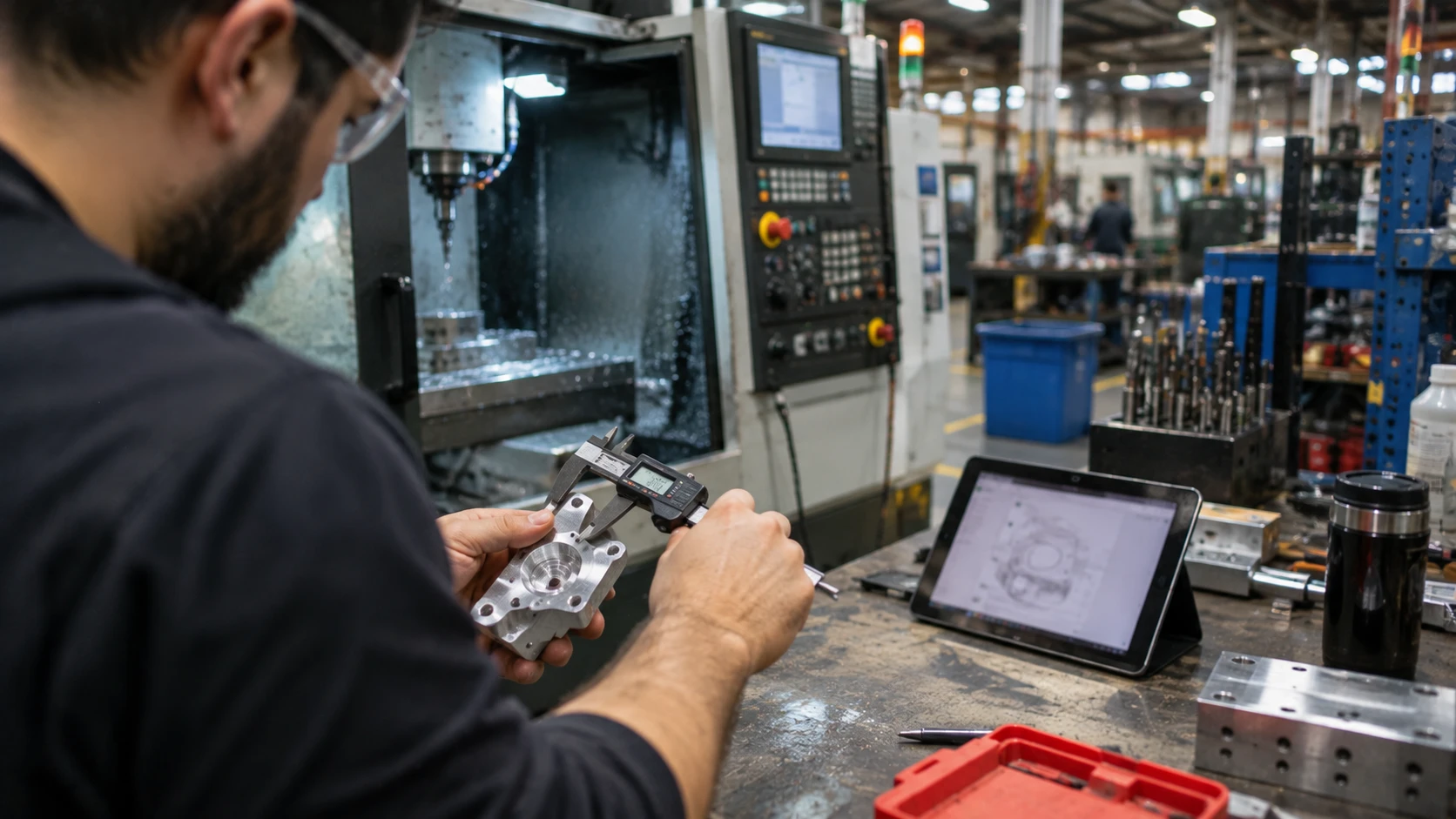
Quick answer: Industrial buyers decide whether to request a quote long before they contact you. A manufacturing website in Ontario should show your capabilities, equipment, materials and tolerances, certifications, industries served, real project examples and a simple RFQ form that accepts drawings. Give each capability and each industry its own page so engineers, Google and AI assistants can match you to their exact need.
Key takeaways
- Engineers and buyers shortlist suppliers online before they make a call.
- Specific beats general: list machines, materials, tolerances and certifications.
- One page per capability and per industry wins more searches.
- An RFQ form with file upload turns research visits into quotes.
Many manufacturing websites in Ontario were built to look credible, not to win work. There is a hero photo of a machine, an About page and a Contact page. Meanwhile, the engineer comparing suppliers wants to know in two minutes whether you can hold their tolerance, in their material, at their volume. If your site does not say so, they move on to the next name on the list.
What industrial buyers look for
| What they check | Why it matters | Where it belongs |
|---|---|---|
| Capabilities and processes | Can you make this part at all? | One page per capability |
| Equipment list | Capacity, part size and bed size limits | Capability pages or an equipment page |
| Materials | Can you work with their alloy, plastic or composite? | Capability pages |
| Tolerances and finishes | Will the part pass inspection? | Capability pages |
| Certifications | ISO 9001, AS9100, IATF 16949 or CWB often decide who is allowed to quote | A quality page, plus a line in the footer |
| Industries served | Do you understand their sector’s standards? | One page per industry |
| Case studies | Proof you have done similar work | Case study pages linked from capabilities |
| Lead times and volumes | Prototype, short run or production? | Capability pages and the FAQ |
| Location and shipping | Logistics, site visits and supply chain risk | About and contact pages |
A page structure that wins searches and RFQs
- Home: what you make, for which industries, and one clear button to request a quote.
- Capabilities hub with a page for each process, such as CNC machining, sheet metal fabrication, welding, finishing or assembly.
- Industries hub with a page for each sector you serve, such as automotive, aerospace, agriculture or food processing.
- Quality and certifications: your quality system, inspection equipment and certificates.
- Case studies: the problem, the part, the process and the result, with photos of real work.
- About and facility: your shop floor, team and location.
- RFQ page: a form built for engineers, plus phone and email.
Build an RFQ form engineers will actually use
- Let people upload drawings and models: PDF, STEP, IGES and DXF.
- Ask only what you need to quote: material, quantity, required date and notes on tolerances or finishes.
- Make most fields optional. A short form that gets submitted beats a long one that does not.
- Say when they will hear back, for example within one business day.
- Mention that you are happy to sign an NDA before reviewing drawings.
- Send each request to the person who actually quotes.
SEO for manufacturers
Industrial searches are specific: “5-axis CNC machining Ontario”, “laser cutting Cambridge”, “powder coating Kitchener”. Each of those deserves a page whose title and main heading use the same words. Add your facility to Google Business Profile, keep your details consistent across industry directories and associations, and ask suppliers and partners to link to you. Specific pages also help you rank for long, detailed searches that larger competitors ignore.
Make your capabilities visible to AI assistants
Buyers now ask ChatGPT and Gemini questions like “which shops in Ontario do small-batch titanium machining?” AI tools can only recommend you if your capabilities are written as plain text on your pages, not hidden in a PDF brochure or an image. Add Organization and Service schema, keep your listings consistent and publish case studies with real numbers. Our guide on checking what ChatGPT says about your business shows how to test it.
Common mistakes
- Capabilities listed only in a downloadable PDF.
- Stock photos instead of your own parts and shop floor.
- A generic “Contact us” form instead of an RFQ form.
- Pages that are hard to read on a phone, where many buyers do their first check.
- Out-of-date certifications or equipment lists.
- Huge, uncompressed images that make the site slow.
Frequently asked questions
How much does a manufacturing website cost in Ontario?
Most manufacturing websites with capability, industry and case study pages fall in the premium custom range of about $6,000 to $15,000 plus HST. Integrations with ERP systems, customer portals or product configurators add to that.
Should we list our equipment publicly?
Usually yes. Buyers need it to judge capacity, and competitors can find out what you run anyway. You can list machine types and capacities without listing every serial number.
Do manufacturers need a blog?
Not a blog for its own sake. Technical guides, material comparisons and case studies that answer real buyer questions are worth far more than company news.
How do we get more RFQs from our website?
Give every capability its own page, show proof with case studies and certifications, put a clear quote button on every page and reply to requests quickly. Speed of response often decides who wins the job.
Need a website that brings in RFQs?
Mediasoli builds B2B websites for manufacturers and industrial companies in Kitchener, Cambridge and across Ontario. Start with a free website audit to see what your current site is missing.

Ugene builds websites, Shopify stores and SEO strategies for businesses across Ontario. He has worked with 30+ brands in Canada, from local shops to the Ontario Government.
Connect on LinkedInKeep reading

How Much Does a Website Cost in Ontario in 2027?
What a website costs in Ontario in 2027: typical price ranges for small business sites, Shopify stores and custom builds, what drives…

Best Web Design Agencies in Waterloo, Ontario (2027 Guide)
Compare the best web design agencies in Waterloo, Ontario for 2027, with what each does best, how to choose and what a…
Have a project in mind?
Tell us where you want to be found, and we will map the way there.